Winter in the Quad Cities is no joke. At the Moline airport, January averages a low of 14.8°F, and we see about 10 nights a year below zero (NWS Quad Cities). The all-time record is -33°F, set on January 31, 2019 (WVIK). Add about 36 inches of snow a season and plenty of wind off the river.
Here's the good news: healthy, cold-hardy hens handle that just fine. Chickens are wrapped in a down coat. What actually hurts them in winter is moisture, drafts, frozen water, and a few avoidable mistakes. This is how we get our flock through it in Carbon Cliff.
Start in October
The average first freeze in the Quad Cities lands around October 15 (NWS). That's your deadline for the big jobs:
- Fix gaps and drafts at roost level, but keep vents open up high
- Plan your water setup before the first hard freeze (more below)
- Stock up on bedding; you'll use more than you think
- Check that every outlet and cord you'll use in the coop is rated for outdoor and livestock use
- Deep-clean the coop now, then switch to deep litter for the winter
Ventilation beats insulation
This is the one people get backwards. A sealed-up coop feels warmer, but it traps the moisture from breathing and droppings (manure is about 70% water). Damp air is what turns cold into frostbite.
The University of Minnesota's advice: seal drafts at the roost, but ventilate above the birds, with roof vents or a partly open window on the south side. If you smell ammonia or see condensation on the walls in the morning, you need more air, not less (UMN Extension).
Frostbite: who's at risk and what helps
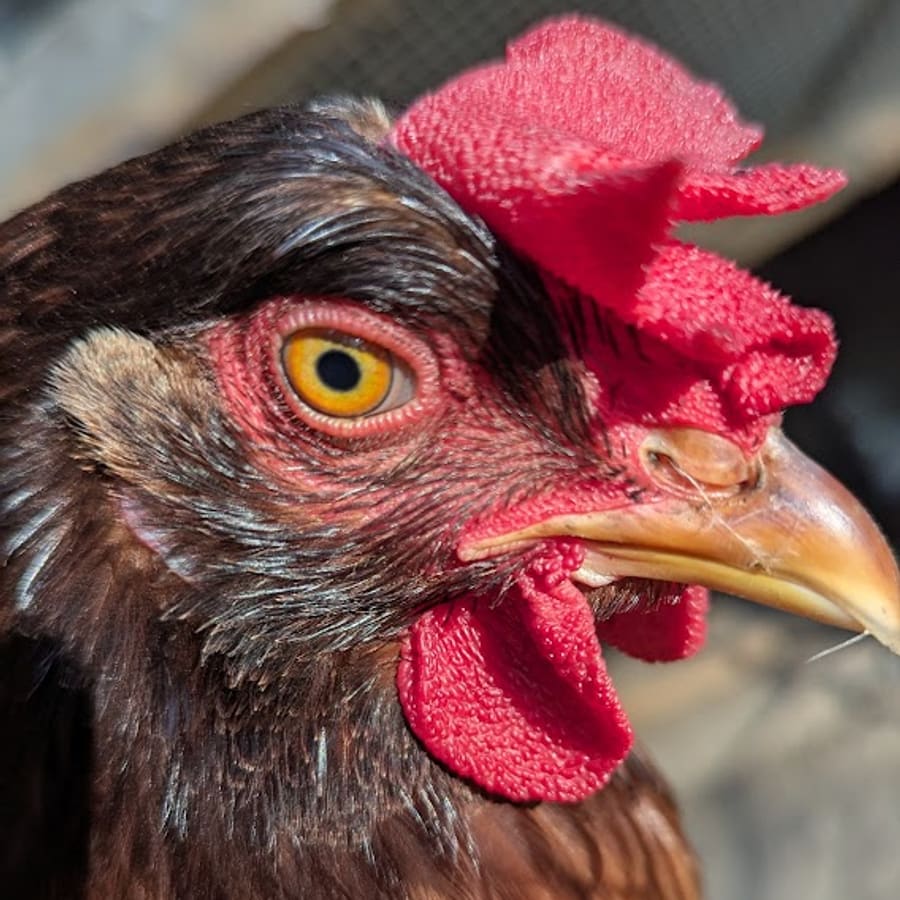
Frostbite mostly shows up on single-digit and below-zero nights, in coops that are poorly ventilated with damp bedding. Birds with big single combs (Leghorns are the classic example) are most at risk (University of Kentucky via extension.org).
- Petroleum jelly on combs and wattles can help insulate them on the worst nights. It doesn't treat frostbite, though, and good coop management is the real fix (UMN, Illinois Extension).
- If it happens: warm the area slowly. No hair dryer, no heat lamp, and don't rub it. Leave blisters alone, and don't give human pain medications, since some are deadly to chickens. Healing takes 4 to 6 weeks (extension.org).
Should you heat the coop?
The experts don't fully agree, so here's the honest version:
- Kentucky Extension says flocks can handle sub-zero temperatures with deep litter and a heated waterer, and no added heat. They warn that heat lamps are a fire risk and can throw off the birds' light schedule (extension.org).
- Minnesota Extension suggests adding heat when it drops below 35°F at roost height, using radiant heaters approved for livestock rather than lamps (UMN).
Both agree on the dangerous part: coop fires are real. If you add heat, never hang a lamp by its cord, always use a guard over the bulb, and don't rely on extension cords long term. For healthy, cold-hardy adult hens, a dry, well-ventilated coop matters more than any heater.
Keep the water flowing
Hens stop eating when they can't drink, and laying stops right behind that. Illinois Extension says they need access to water at least every 10 hours (Illinois Extension).
Your options, from simplest to fanciest:
- Two waterers you swap each morning and evening (cheap, but it's a commitment).
- A heated dog bowl, which hens use happily.
- A heated base or heated fount, kept up off the bedding.
Whatever you choose, keep a spare. The night it fails will be the coldest night of the year.
Feed a little more, and time the treats
Cold birds eat more, sometimes up to 25% more (UMN). Keep layer feed available all day and keep grit out.
Scratch grains are a fine winter treat, but go easy: about a handful per 10 birds, tossed in before they roost, gives them something to digest overnight (UMN). For the full picture on feeding, see What to Feed Backyard Chickens.
Let deep litter do some of the work
Instead of cleaning the coop out all winter, keep adding fresh bedding on top and stir it now and then. Breaking-down manure gives off a little heat, and the deep layer insulates the floor. Extension recommendations range from 4 to 6 inches (UMN) up to 6 to 12 inches of dry bedding (Illinois Extension). Clean it all out in spring.
Shorter days mean fewer eggs (and that's normal)
On the winter solstice, the Quad Cities gets only about 9 hours and 11 minutes of daylight (U.S. Naval Observatory). Hens need around 14 to 16 hours of light to lay steadily (Penn State Extension), so most flocks slow way down in December and January. Many hens also molt in the fall, when they drop feathers and pause laying while they regrow them.
You have two choices:
- Add light. Put a light on a timer that turns on in the early morning, so the birds still go to roost with the natural sunset. That's the approach Penn State and Minnesota recommend.
- Let them rest. Plenty of backyard keepers let their hens take the winter off. Extension guides focus on light for laying, so this one comes down to your own preference.
Pick birds built for it
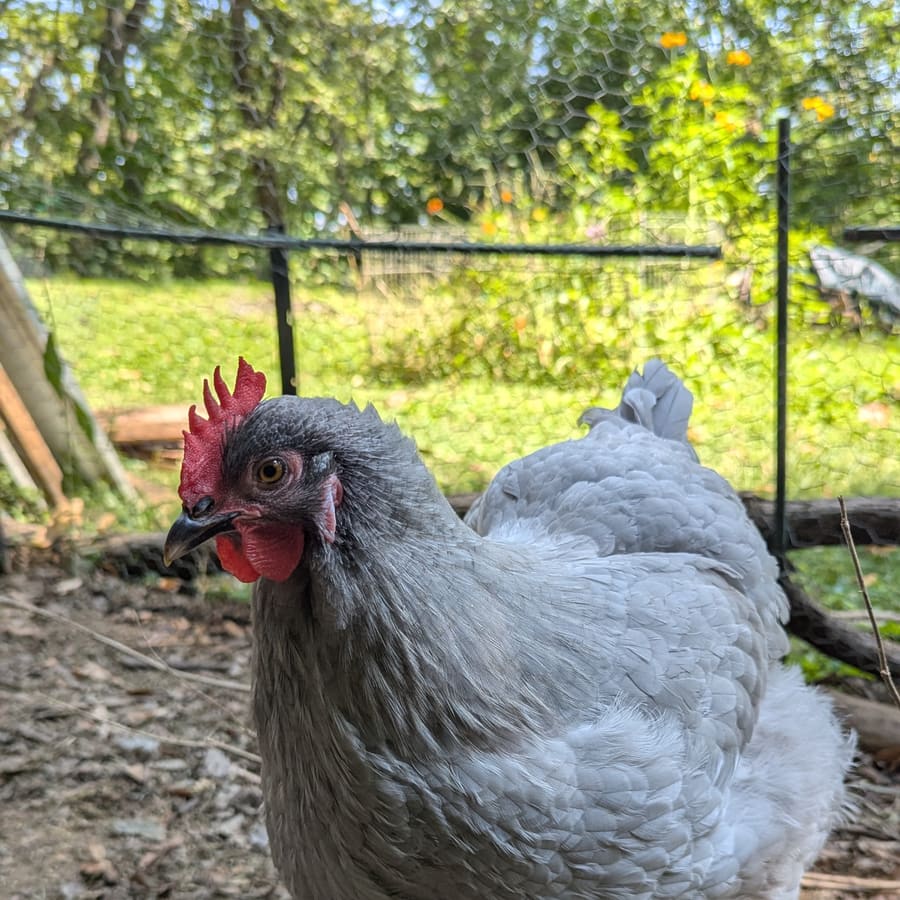
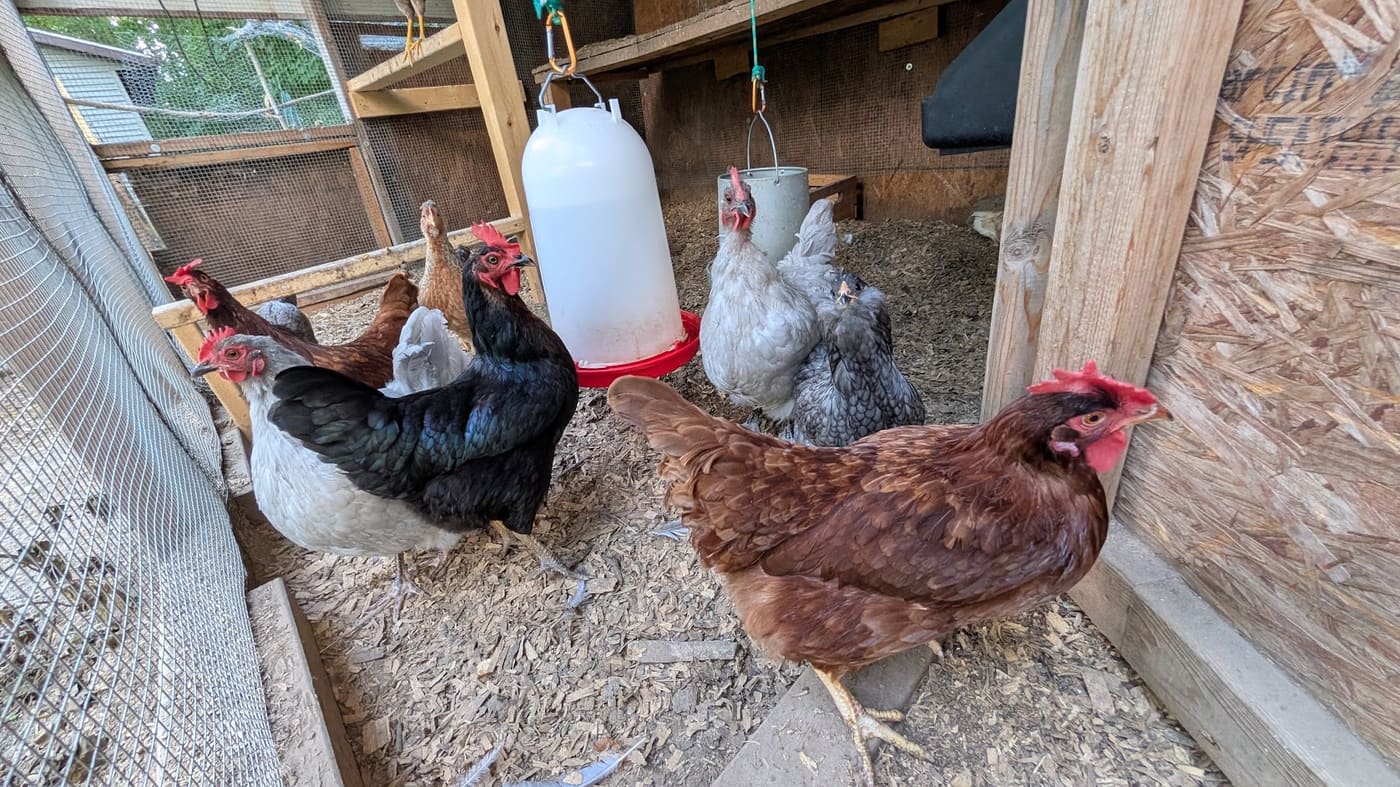
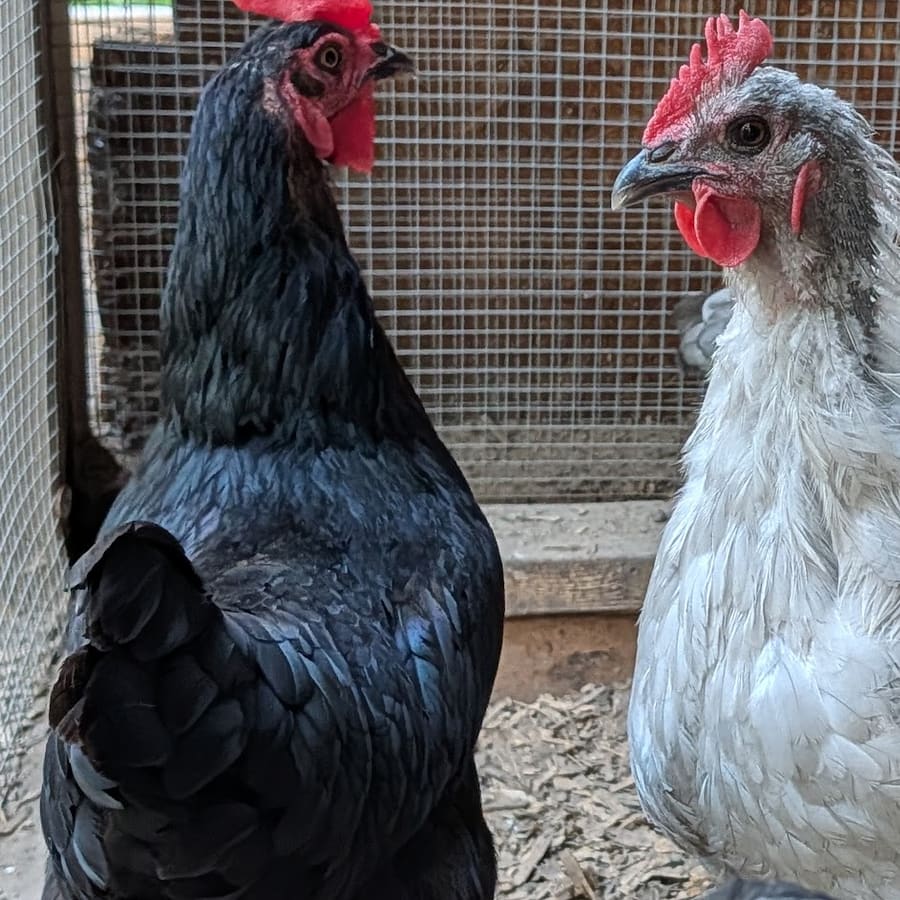
Cold-hardy breeds make all of this easier. Minnesota Extension names Plymouth Rocks, Wyandottes, Ameraucanas, and Orpingtons, and notes that birds with big combs need extra care (UMN). Our own Australorps are heavy, fluffy, and shrug off January like it's nothing. See Raising Your First Backyard Chickens for more breed picks.
Winter is also bird flu season
The Quad Cities sits right on the Mississippi Flyway, a major migration route. Wild waterfowl can carry the current strain of avian influenza (HPAI) without getting sick, and the risk rises from October through May as they move south and back (University of Arkansas Extension). Iowa has had several detections in 2026, including backyard flocks (Iowa Dept. of Agriculture).
Simple habits go a long way:
- Keep feed and water where wild birds can't reach them.
- Use dedicated boots for the coop, and limit visitors.
- Quarantine new birds for 30 days.
- Watch for sudden deaths, a drop in eating or drinking, or a sharp drop in laying.
Report sick or dead birds: Illinois Dept. of Agriculture at 217-782-4944, Iowa Dept. of Agriculture at 515-281-5305, or the USDA at 1-866-536-7593 (Illinois, Iowa).
Your blizzard-day routine
When a storm or a cold snap rolls in:
- Morning: fresh unfrozen water, top up feed, check every bird.
- Midday: collect eggs early, before they freeze and crack.
- Afternoon: add fresh bedding and toss some scratch.
- Evening: head count, check that vents are open and doors are latched.
- Sub-zero nights: look for morning condensation, and check combs for pale or dark spots.
Local help
- University of Illinois Extension, Rock Island County office in Milan: 309-756-9978 (extension.illinois.edu/hmrs)
- Iowa State University Extension, Scott County, in Bettendorf: 563-359-7577 (extension.iastate.edu/scott)
Weather figures are NOAA 1991 to 2020 normals for Quad City International Airport. Bird flu conditions change quickly, so check your state's agriculture department for current alerts. Information checked November 2026.
Want more seasonal flock tips as the weather turns? Join The Coop List and we'll send them your way.