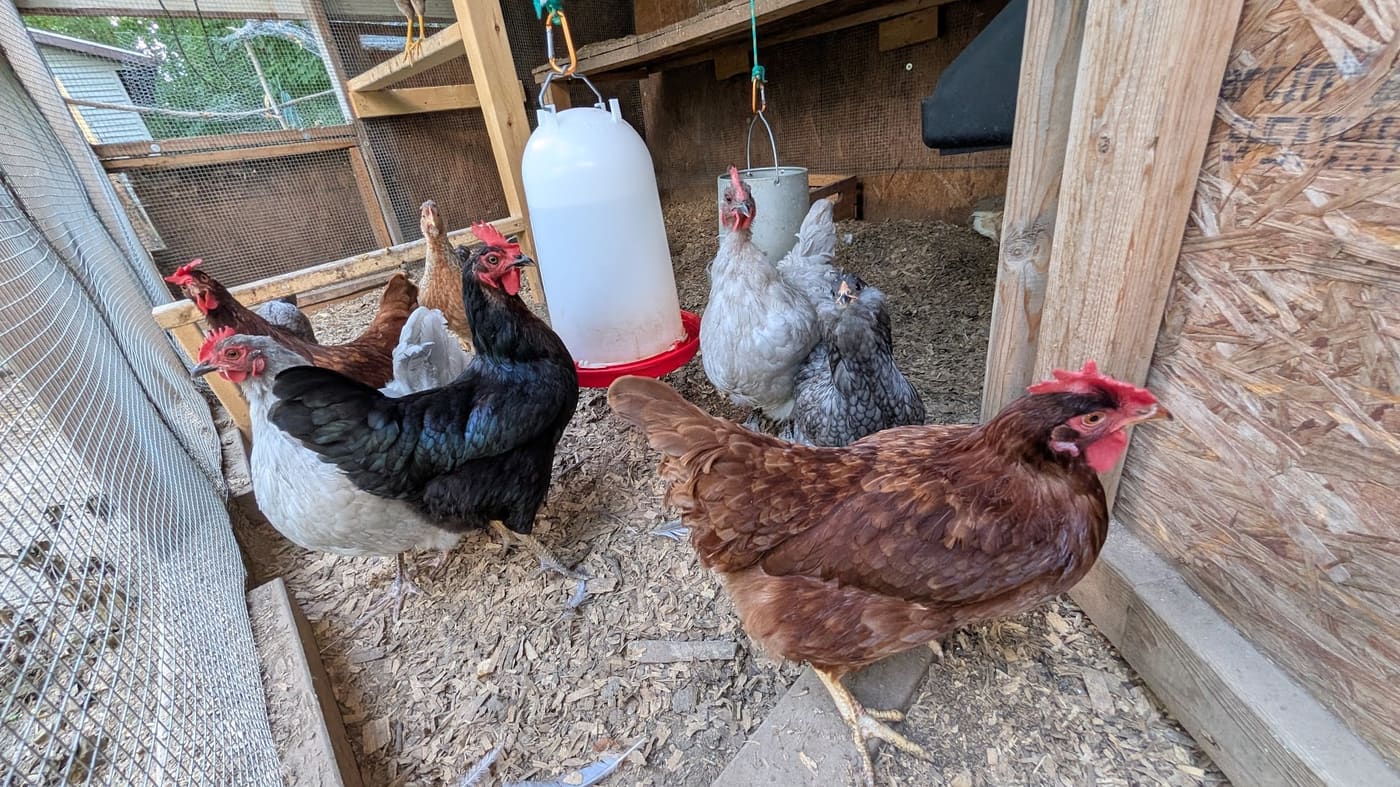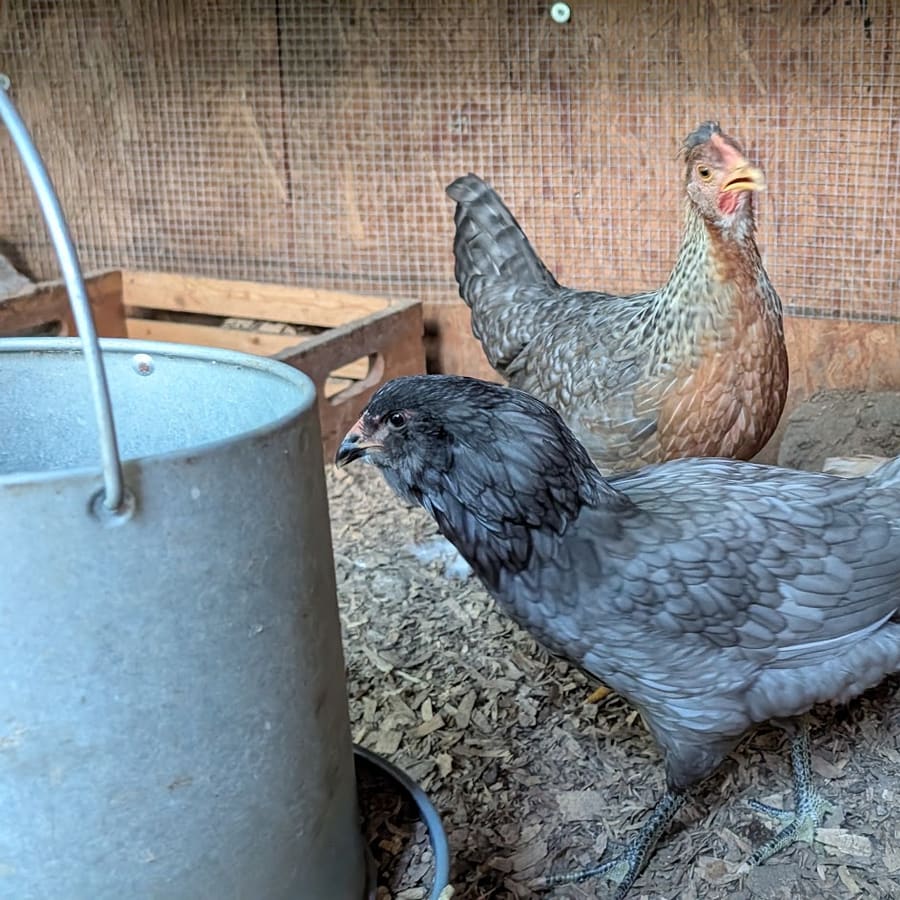
Feeding chickens is simple once you know the four things that actually matter. Get these right and you'll have healthy hens and strong-shelled eggs year-round.
1. A complete layer feed does the heavy lifting
For hens that are laying, a complete layer feed (about 16% protein, with added calcium) should make up the bulk of their diet. It's formulated to cover everything they need. Keep it available all day in a feeder that stays dry. Chickens eat little and often, and they won't overeat.
Growing chicks need a starter/grower feed instead, and shouldn't get layer feed until they're about 18 weeks old; the extra calcium is hard on young kidneys.
2. Calcium on the side
Even with layer feed, offer crushed oyster shell in a separate dish. Hens pulling extra calcium as they need it is what gives you hard shells instead of thin, dented ones. Don't mix it into the feed. Let them choose.
3. Grit, because chickens have no teeth
Chickens grind their food in the gizzard using small stones called grit. If your flock free-ranges on real dirt they'll find their own. If they're mostly in a run, provide grit, especially if you feed anything beyond crumble or pellet.
4. Treats: fun, but keep them under 10%
Treats and scraps are great for keeping hens happy and friendly, but they dilute the balanced feed. A good rule: treats stay under about 10% of the total diet. Flock favorites here:
- Leafy greens, cucumber, squash
- Cooked oats or plain rice
- Mealworms (our girls lose their minds for these)
- Cracked corn (in winter, sparingly, as a warm-up snack)
Foods to skip
A short "do not feed" list worth memorizing:
- Avocado (pit and skin especially)
- Raw or dried beans
- Anything moldy or spoiled
- Chocolate, caffeine, and very salty or sugary foods
- Onions in large amounts
When in doubt, leave it out.
What good feeding looks like
Bright combs, glossy feathers, steady eggs with firm shells, and hens that come running when they see you. If shells get thin, add calcium. If laying drops in winter, that's usually daylight, not diet.
New to all this? Start with our beginner's guide to raising backyard chickens, then come back here to dial in the feed.