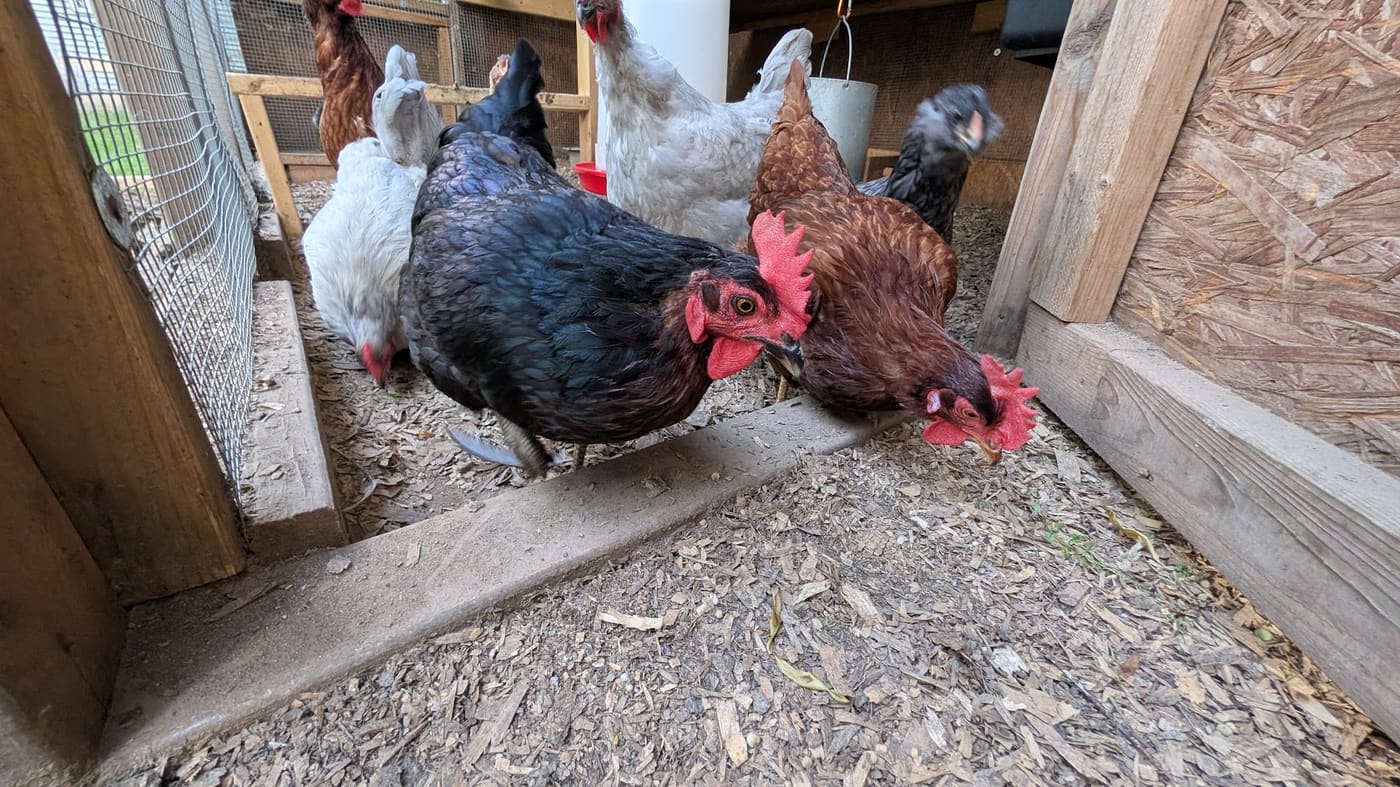
When we built The Cliff Coop, we wanted three things: safe from predators, easy to clean, and big enough to walk into. This is the setup we landed on after a couple of mistakes, sized for 4 to 6 hens.
This isn't a full engineered blueprint (that's coming to the Shop as a printable PDF with cut lists). Consider this the honest overview so you can decide if it's the build for you.
The footprint
- Coop: 4' × 4' raised box (16 sq ft), comfortable for up to 6 hens at 4 sq ft each.
- Run: 8' × 6' attached, walk-in height (about 48 sq ft), 8+ sq ft per bird.
- Total: roughly a 6' × 12' patch of yard.
Raising the coop off the ground on legs does three things: gives the hens shade underneath, keeps the floor dry, and removes a hiding spot for rodents.
Materials list
- Pressure-treated 4×4s for the legs and base
- 2×4s for framing
- ½" exterior plywood for the coop box
- ½" hardware cloth for all run walls and any vents (never chicken wire)
- Corrugated roofing panels for the run and coop
- Metal hardware: hinges, a two-step predator-proof latch, screws
- Pine shavings for bedding
The parts that actually matter
Predator-proofing is the whole game. The single biggest mistake beginners make is chicken wire: it keeps chickens in but does nothing to keep raccoons, dogs, or hawks out. Use ½-inch hardware cloth everywhere, and add a skirt: bend the hardware cloth outward along the ground about 12 inches so diggers hit wire and give up.
Use real latches. Raccoons can work a simple hook. A two-step latch (turn-and-lift, or a spring clip) is worth every penny.
Build the coop to clean itself. A removable droppings board under the roost, a big people-sized door, and a smooth floor you can scrape make weekly cleaning a 5-minute job instead of a chore you dread.
Inside the coop
- Roost bar higher than the nest boxes (hens sleep at the highest point, so if the boxes are higher, they'll sleep and poop in them).
- Two nest boxes, 12" × 12", tucked in a darker corner.
- Ventilation up high, covered in hardware cloth, so warm damp air escapes above the birds without a draft on the roost.
What we'd do differently
We made the first run too short to stand up in, and cleaning it was miserable. Walk-in height is worth the extra lumber. We also wish we'd added the hardware-cloth skirt from day one instead of after a raccoon taught us the lesson.
Want the full cut list and step-by-step diagrams? We're putting together a printable build pack. Join The Coop List and we'll tell you the moment it's ready.